
Titus Morebu
Author
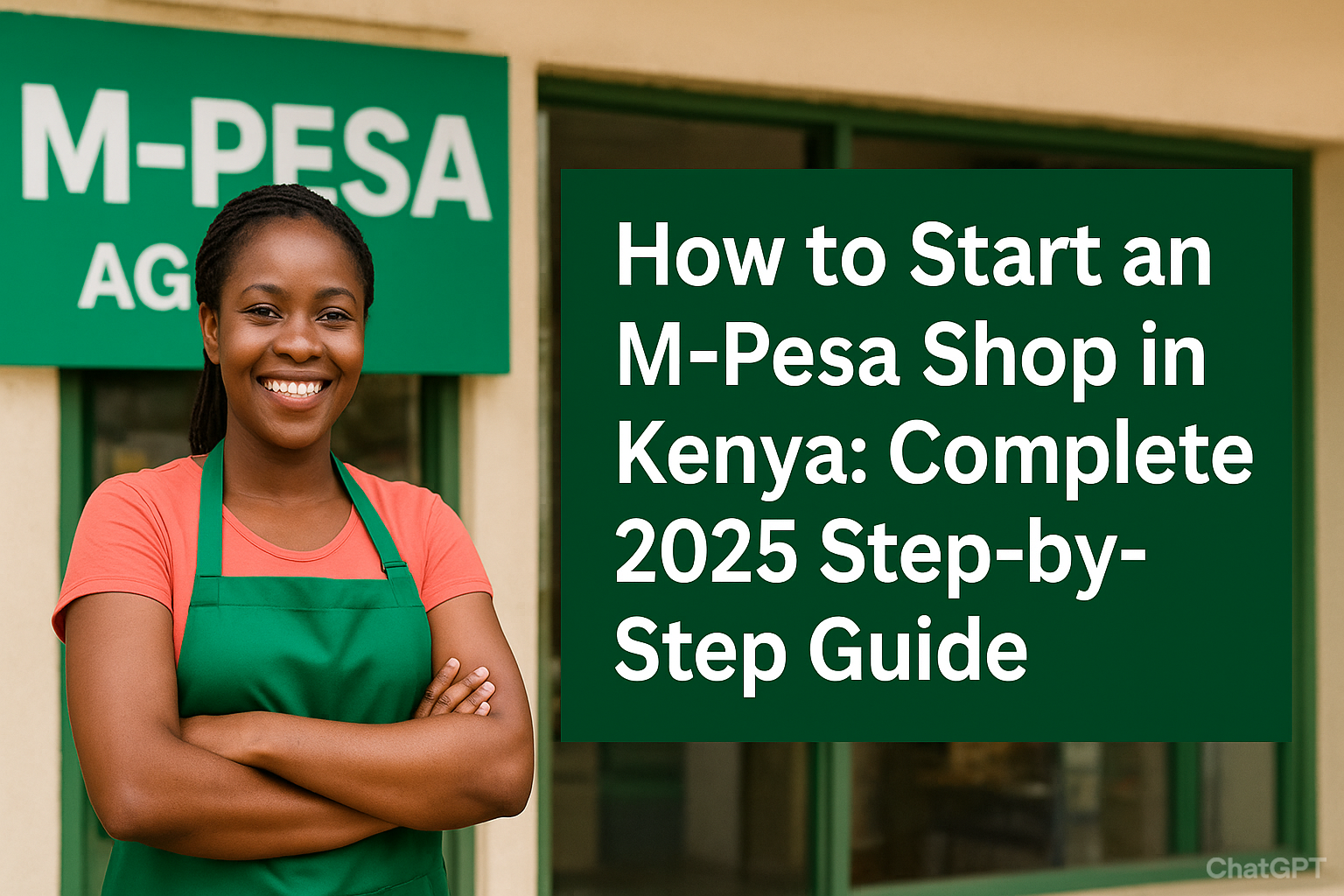
How to Start an M-Pesa Shop in Kenya: Complete 2025 Step-by-Step Guide
Learn step-by-step how to become a Safaricom M-Pesa agent shop in Kenya in 2025 — requirements, investment, documents, profits & tips to succeed.
Why Start an M-Pesa Shop? 💡
M-Pesa remains one of the most widely used mobile financial services in Kenya, offering money transfers, deposits, withdrawals and other services. Setting up an agent shop gives you a steady income stream from transaction commissions, while serving your local community and building trust. With the demand growing, especially in underserved areas, the opportunity remains strong.
Overview: What it Means to Be an M-Pesa Agent / Shop
- Operate as an Authorized Agent under Safaricom (or under a Super Agent).
- Handle customer transactions including deposits (cash-in), withdrawals (cash-out), new registrations, and possibly PayBill / Lipa Na M-Pesa services.
- Maintain a float (cash & e-money liquidity) so customers can transact without delays.
- Comply with regulatory, branding, and technological requirements for reliability and integrity.
Step-by-Step Guide to Starting Your M-Pesa Shop
Step 1: Business Structure & Legal Registration
- Register as a legal entity. Usually a limited company or equivalent.
- Ensure your business has been operating for at least **6 months** under that registration. This shows stability. (Safaricom requirement)
- Obtain or renew required licenses, including business permit from your local county, tax compliance certificate etc.
- Register or confirm Kenya Revenue Authority (KRA) PIN, and ensure all company documents (CR12 or equivalent for companies) are up to date. CR12 is a document showing current shareholders / directors.
Step 2: Identify Outlets & Location
- You will need **at least three outlets** ready to offer M-Pesa under the company name to qualify as a standard agent. These outlets must be audited before operations begin.
- Select locations with high foot traffic: near markets, busy roads, transport hubs, commercial centres.
- Ensure the premises meet Safaricom branding and signage requirements — visibility, signage, signage type, safety etc.
Step 3: Prepare Required Documents & Verification
- Certificate of Incorporation (or equivalent in other business types).
- Form CR12 (valid within the last 90 days) for directors or owners.
- Valid national IDs or passports, with passport photos for the owners / directors.
- Business permit from the local county.
- Tax compliance certificate, KRA PIN documentation.
- Other due diligence (KYC / AML) paperwork as required.
Step 4: Financial Requirements & Float Investment
- Each outlet must have an initial float (cash & electronic money) — Safaricom requires around **KES 100,000 per outlet**. This ensures you can cover withdrawals and cash-ins.
- There may also be fees or deposits for SIM replacement (SIMEX) or other technical components.
- If running multiple outlets, ensure you have sufficient capital to maintain float in each. Late deposits or failing to maintain float may lead to contract revocation.
Step 5: Technical & Equipment Setup
- Head office / central coordination: computer(s), printer, internet, email contact and telephone line. These help with reporting, accounting, managing multiple outlets.
- Ensure you have approved point-of‐sale or till systems where required (e.g. for Lipa Na M-Pesa services).
- Ensure staff with minimum qualifications (often at least KCSE or equivalent) and integrity. Staff will be handling cash and sensitive customer data.
Step 6: Apply & Get Contracted
- Submit your application to a Super Agent or directly to Safaricom, with all required documents and proposed outlets audited and approved.
- Super Agents are companies contracted by Safaricom who onboard and support multiple agents. If you work under a Super Agent, their terms may add to what Safaricom mandates.
- Once approved, you receive your till / agent identifiers, line SIMs, signage / branding guidelines.
Step 7: Launch Operations
- Set up your outlets: signage, safe secure cash storage, float management tools, record-keeping.
- Train staff in customer service, fraud prevention, KYC procedures, and how to use the technology (SIM, phones, till, reports).
- Begin offering services: new customer registrations, deposits, withdrawals, bill payments etc.
- Monitor transactions closely, maintain liquidity, watch for issues like float shortages, overdrawn till etc.
Key Safaricom-Specific & 2025 Updates
As of mid-2025, Safaricom has clarified some updated requirements and distinctions:
- To qualify as a **Super Agent**, you must meet standard agent requirements, plus maintain a minimum float balance of **KES 200,000 in the head office**, and be ready to deploy at least three outlets.
- Exceptional / special categories (banks, supermarkets, hospitals, petrol stations) or remote locations may have relaxed outlet number requirements — sometimes as low as one outlet — but with higher float / capital.
- Some financial institutions now offer “float financing” to agent shops, allowing agents to borrow against commissions or residual income to maintain liquidity. (Useful for agents in high-growth or high traffic areas.)
Profitability: What to Expect & How to Maximize
- Commission margins: Agents earn commission per transaction — deposits, withdrawals, new registrations etc. The more transactions you handle, the more you earn. Margins per transaction are small, so high volume is crucial.
- Location matters: Busy roads, transport hubs, dense residential or commercial areas increase transaction volume.
- Reliability & availability: Always maintain float, avoid downtime — if customers come and you cannot serve them, you’ll lose trust and business.
- Trust & customer education: Many users are new to mobile money services. Helping customers understand charges, safety (PIN, receipts), etc., builds loyalty and word-of-mouth growth.
- Diversify services: Agents often also offer Lipa Na M-Pesa, PayBill, buy goods, minor banking agency services. These widen income streams.
- Cost control: Minimize losses (fraud, theft, float mismanagement), control overheads (transport, rent, utilities), keep good records for taxes, etc.
Challenges & Ways to Overcome Them
- Float shortages: Plan your cash flow; consider partnering with super-agents or banks that offer float financing.
- Security risks: Secure premises, minimal staff handling cash, install CCTV where feasible, maintain logs of transactions.
- Fraud / misuse: Follow KYC/AML rules strictly; train staff; verify customer identities; keep good records.
- Regulatory changes: Stay updated with Safaricom policies, Central Bank of Kenya regulations, tax laws etc.
- Competition: Be courteous, fast, reliable. Good location and service help you stand out.
Useful Resources & External Reading 📚
Checklist: Before You Start
- ✔ Registered company, valid documents (CR12, IDs, business permit).
- ✔ Minimum 3 outlets (unless special category/remote), each with staffing, signage, safety.
- ✔ Float of ~KES 100,000 per outlet (or higher for special / super agents).
- ✔ Technical setup: computer, internet, communication lines, printer, email etc.
- ✔ Qualified & trained staff.
- ✔ Branding & signage arranged.
- ✔ Contract signed with Safaricom or via Super Agent, till lines / SIMs in place.
Conclusion
Starting an M-Pesa shop is a viable and often profitable small business in Kenya. It requires a mix of legal readiness, sufficient capital (especially float), technical set-up, and a good location. With rising demand for mobile money and payments, those who do it well—maintaining float, delivering great service, and staying compliant—can build a sustainable business. If you're ready, begin with the registration and documentation steps, set up your outlets smartly, and keep your operations solid.
Gallery
Related Articles
3 articles
How to Make Money While Sleeping in Kenya (2026)
Discover proven passive income ideas in Kenya that earn you money 24/7, even while you sleep. Learn realistic strategies, tools, and income potential.

Best Side Hustles for Students in Kenya (2026 Guide)
Discover the best side hustles for students in Kenya. Learn how to earn money online and offline with low capital and flexible schedules.

Trending Businesses in Kenya Right Now (2026 Guide)
Discover trending businesses in Kenya right now in 2026. Learn profitable ideas, startup costs, and how to succeed in today’s evolving economy.