
Titus Morebu
Author
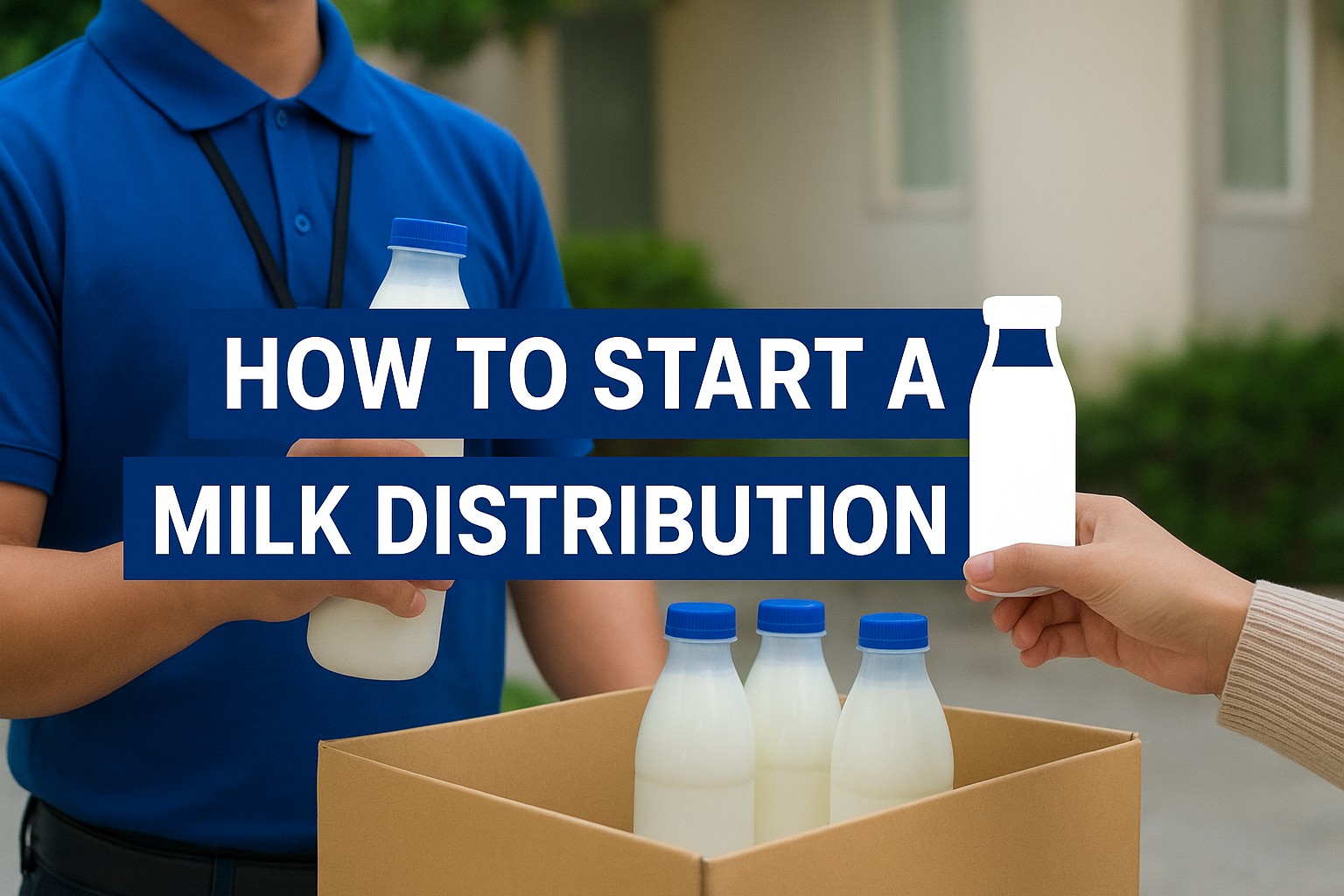
How to Start a Milk Distribution Business 🥛
Learn how to launch a successful milk distribution business—from choosing suppliers and licenses to delivery models and marketing—for reliable growth in dairy.
How to Start a Milk Distribution Business 🥛
Starting a milk distribution business can be a rewarding venture—bringing fresh, high-quality milk to households and businesses in your region, creating jobs, and tapping into growing demand for convenient dairy delivery. This guide will walk you step by step, with actionable insights and key considerations to help you launch and succeed.
Why this business matters
- Demand for fresh and packaged dairy is increasing globally—consumers care more about quality, convenience and sustainability.
- Milk has a relatively stable consumer base: households, cafés, offices and institutions still need it daily.
- A distribution business can scale: you can start small (local area) and grow into wholesale, subscription or multi-zone operations.
Step 1: Define your model and target market 🎯
Before jumping in, you need clarity on what type of milk distribution business you’ll run and whom you’ll serve.
Choose your business model
- Direct-to-consumer (D2C): Deliver milk/packs daily or regularly to households. Great for urban & high-density areas.
- Wholesale/B2B distribution: Supply milk to cafés, restaurants, retailers, institutions—bulk orders, less frequent deliveries.
- Subscription model: Customers subscribe to receive fresh milk on a recurring basis (daily/weekly). This improves revenue predictability.
Identify your target market
Examples of strong target segments:
- Busy households in urban areas who value fresh delivery each morning.
- Small cafés and offices that need consistent supply of fresh milk.
- Health-conscious consumers (organic milk, A2 milk, goat milk) willing to pay more for premium.
Map out the geography: delivery radius, population density, competition, and logistics feasibility.
Step 2: Create a strong business plan & legal foundation
A well-structured business plan is key—investors, banks or your own strategy will benefit. And legal setup will protect you.
Business plan essentials
- Describe your business model, product offering (milk only? dairy extras?), and value proposition.
- Perform a market analysis: local demand, competitor landscape, pricing benchmarks.
- Financial projections: startup costs (vehicles, storage, packaging), running costs (fuel, labour, chill storage), revenue forecast, break-even point.
- Operations plan: supply chain, storage, delivery schedule, inventory management.
- Marketing and growth strategy: how you’ll attract and retain customers.
Legal and regulatory steps
- Register your business with the appropriate authority in your country or region.
- Obtain required licenses/permits for handling, transporting and distributing dairy. Food-safety inspections may apply.
- Open a business bank account and set up accounting systems.
- Get insurance: general liability, product liability, vehicle/transport insurance where needed.
Step 3: Set up your supply chain and product range
Your supply chain is at the core of your business—good milk, timely delivery, and safe storage mean happy customers and fewer losses.
Select reliable suppliers
- Work with local dairy farms or processing plants that have good hygiene, cold-chain practices, and consistent supply.
- Evaluate suppliers for quality, quantity capacity, distance to your distribution hub, and reliability.
- Consider multiple suppliers or backup sources in case of disruptions.
Define product range and packaging
Milk distribution often includes options beyond plain milk:
- Whole milk, skimmed milk, flavored milk (e.g., chocolate), specialty (organic, A2, goat milk).
- Packaging types: sachets/pouches, cartons, glass bottles, plastic bottles—decide based on cost, customer preference, and environmental concerns.
- Complementary dairy products: yogurt, butter, cream, cheese—delivering more items can increase basket size.
Step 4: Logistics, cold-chain & delivery infrastructure
Excellent logistics are a differentiator in milk distribution—milk spoils quickly, so speed and cold-chain matters.
Storage & transport
- Have cool storage or chilled refrigeration unit at your hub before dispatching.
- Delivery vehicles should maintain appropriate temperature or have insulated compartments—especially if ambient conditions are hot.
- Select routing that minimises time from collection to delivery—density of stops matters.
Delivery operations
- Define delivery zones and frequency (daily morning, alternate days, weekly). High-frequency usually drives higher trust.
- Use route-optimization tools or plan efficient loops to save fuel and time.
- Branded vehicles/uniforms enhance trust and visibility.
- Maintain hygiene during delivery and avoid delays—milk is perishable.
Step 5: Marketing & customer acquisition 📣
Even the best product needs effective marketing. In milk distribution, word of mouth, trust, and consistency say a lot.
Key marketing tactics
- Create a simple but clean website describing your service, subscription models, pricing and delivery areas.
- Leverage social media (Facebook, Instagram) to share behind-the-scenes: sourcing from local farms, delivery snapshots, customer testimonials.
- Offer trial offers or introductory discounts to first-time customers.
- Encourage reviews and referrals—happy customers will tell neighbours.
- Partner with local grocery stores, cafés or offices to supply milk, increasing brand visibility.
Customer retention strategies
- Subscription plans with flexible options (pause, change quantity) build loyalty.
- Reward referral programmes: e.g., “Refer a friend and get a free delivery”.
- Quality + punctual delivery = strong retention. Keep your promise.
Step 6: Financial tracking, cost control and scaling
Keeping a sharp eye on finances will ensure your business remains profitable and scalable.
Cost-control tips
- Track fuel, vehicle maintenance, packaging cost, labour hours and spoilage rates closely.
- Use software or spreadsheet to monitor deliveries per route, cost per delivery and margin per litre.
- Negotiate better rates with suppliers as you scale, and review packaging options (bulk-buy, efficient logistics).
Scale your business
- Once you have stability in one zone, expand to adjacent neighbourhoods or zip codes.
- Introduce additional product lines—yogurt, cheese, butter—to increase the average order size.
- Consider franchise or partnership models to grow without owning every delivery vehicle.
- Automate order-taking, customer management and delivery scheduling with software as you grow.
Step 7: Quality control, regulation and sustainability
Quality and compliance will protect your brand and business from risks. Sustainability adds value and can attract premium customers.
Quality & regulatory compliance
- Follow sanitary transport, storage and handling rules—milk is regulated in many jurisdictions.
- Get your facility, vehicles and processes inspected where needed and maintain records.
- Test quality regularly: freshness, temperature during transport, packaging integrity.
Embrace sustainability
- Consider eco-friendly packaging (glass bottles, reusable containers) which many consumers appreciate.
- Reduce food loss/spoilage by accurate forecasting and efficient routing.
- Highlight local sourcing, ethical farms and reduced transport footprint as differentiators.
Common challenges & how to overcome them
Every business faces hurdles—knowing them in advance helps you prepare.
- Perishability and spoilage: Minimise by efficient logistics, chill storage, precise delivery schedules.
- Low margin on basic milk alone: Boost margins by adding value-added dairy products or premium variants.
- Competition from large players: Focus on local service, freshness, niche segments (organic, goat-milk) and subscription convenience.
- Logistics cost in low-density areas: Evaluate delivery zones carefully; group deliveries or raise minimum order in sparsely populated locations.
Conclusion
Launching a milk distribution business is a practical and scalable opportunity. By choosing the right model, securing reliable supply, investing in efficient logistics, building your brand and retaining your customers, you set the foundation for success. Quality, consistency and trust are your most valuable assets.
Ready to take the next step? Secure your business registration, align with a dependable dairy source, and map out your first delivery route—fresh milk delivery awaits! 🥛
Tip: Keep learning and adapting—milk trends, packaging, and delivery expectations will evolve. Stay ahead by continuously improving your service.
Gallery
Related Articles
3 articles
How to Make Money While Sleeping in Kenya (2026)
Discover proven passive income ideas in Kenya that earn you money 24/7, even while you sleep. Learn realistic strategies, tools, and income potential.

Best Side Hustles for Students in Kenya (2026 Guide)
Discover the best side hustles for students in Kenya. Learn how to earn money online and offline with low capital and flexible schedules.

Trending Businesses in Kenya Right Now (2026 Guide)
Discover trending businesses in Kenya right now in 2026. Learn profitable ideas, startup costs, and how to succeed in today’s evolving economy.