
Titus Morebu
Author
How to Sell Fresh Juice & Snacks in Residential Estates – Ultimate Guide
Discover how to launch and grow a thriving fresh-juice and snack business in estates: location, menu, pricing, marketing & logistics all covered.
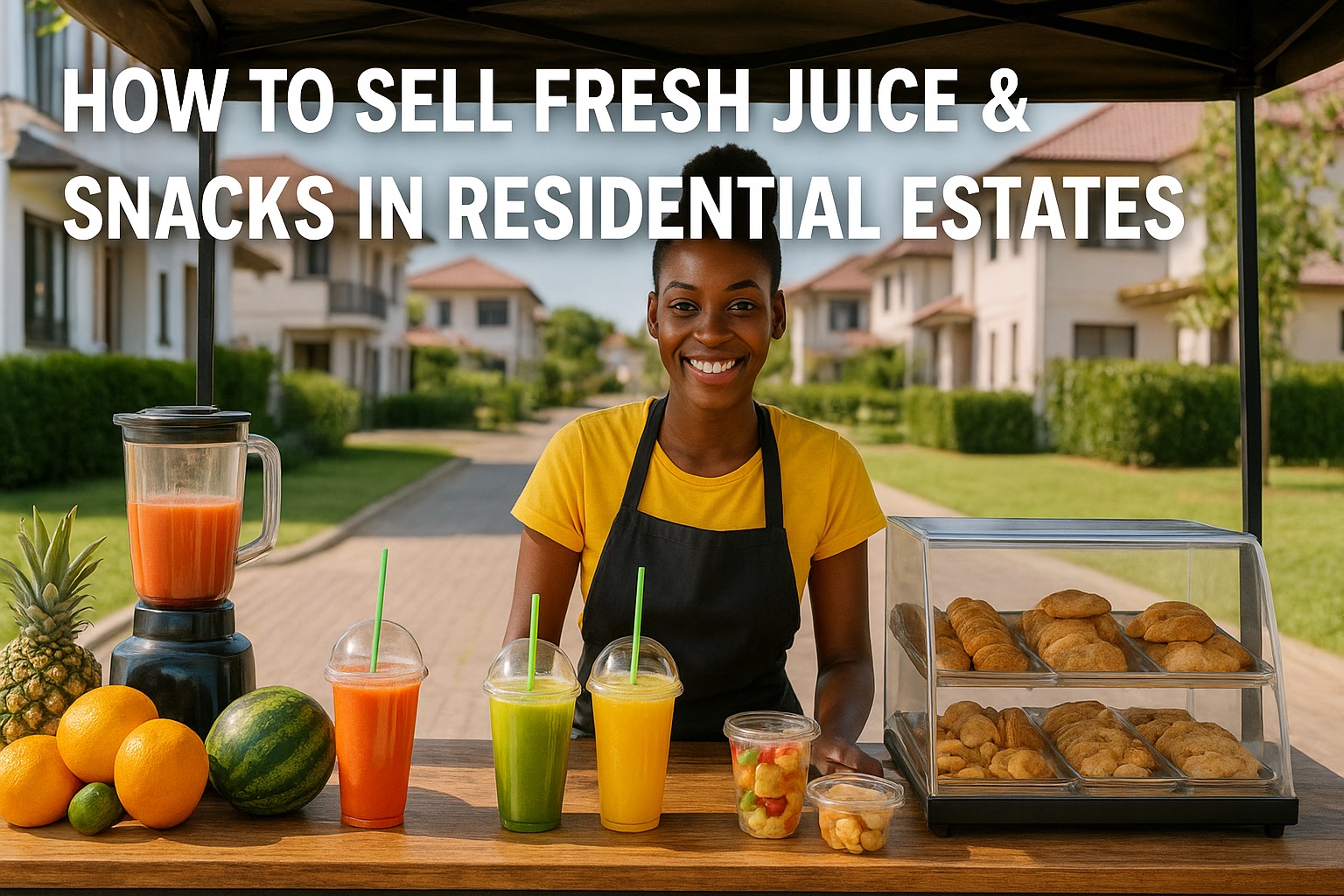
How to Sell Fresh Juice & Snacks in Residential Estates 🍹🍪
If you're looking to start a small business selling fresh juice and snacks in residential estates, this guide covers everything you need—from choosing your estate and location, to pricing, menu design, marketing, logistics and scaling up. Follow these steps carefully to maximize your chances of success.
1. Why Estates Are a Great Market
- Existing captive audience: Residents living in an estate (apartment complex or gated community) already live in one place and likely appreciate a convenient fresh-juice and snack option.
- Health & convenience trend: Many people are shifting towards healthier choices, using fresh juice instead of sugary sodas. This presents an opportunity.
- Lower competition than high-street locations: Estates often have fewer food vendors, which means you may face less competition and can build a loyal base.
- Scalable and repeatable: Once you establish one estate location with good systems, you can replicate to other estates or neighbouring areas.
2. Planning Your Business Setup
2.1 Choose the Right Estate & Spot
Picking the right estate and micro-location within it is crucial.
- Choose an estate with good foot traffic or high density of residents. If many families live there, even better.
- Look for spots near a gathering point – such as near a gate, by a playground, by the pool, near the clubhouse or near the laundry/parking area.
- Ensure you have permission from the estate management or homeowners’ association. Without this, you risk being asked to leave.
- Consider access: Can you bring in stock easily? Is there storage? Are there utilities (electricity, water) available?
2.2 Licensing, Permits & Hygiene
For a food-and-drink business, especially within an estate, you need to cover regulatory bases.
- Obtain a business or single-business permit from your county or local authority.
- Get a food hygiene permit/health licence and ensure you meet minimum health standards for preparing beverages and snacks.
- Ensure good training for whoever handles the food/beverage – hygiene, cleaning, safe storage.
- Have proper packaging and disposal of wastes, including fruit pulp, cups, lids, straws, snack wrappers.
2.3 Equipment, Setup & Inventory
You’ll need to plan for tools, supplies and stock. Keeping costs low while getting quality will help your profit margin.
- Basic equipment: blender or juicer; fridge or cooler to keep juices cold; display station or portable table; cups & lids; napkins; straws; snack display racks.
- Stock of fruits for juices: oranges, mangoes, pineapples, watermelons, etc. Choose fruits in season to cut cost.
- Snacks: pair your fresh juice business with complementary items—healthy snacks (fruit cups, yoghurt parfaits, whole-grain biscuits) and maybe more indulgent snacks (cookies, pastries) depending on market.
- Packaging: Invest in eco-friendly or neat packaging. A clean presentation helps sell better and builds trust.
3. Designing Your Menu & Pricing Strategy
3.1 Keep Menu Simple & Attractive
A simple, focused menu helps you manage inventory and avoid waste.
- Start with 5-7 core juices: e.g., orange, pineapple + mint, watermelon + lime, mango, mixed tropical. Avoid too many options at first. This keeps preparation efficient.
- Add 2-3 snack options to pair with the drinks. For instance: fruit cups, granola bars, small muffins or locally popular snacks.
- Offer combos: juice + snack at a small discount vs buying separately. People like bundles.
- Seasonal specials: When a fruit is in season (cheaper procurement) run a “fresh flavour of the week” to generate interest.
3.2 Pricing to Cover Costs & Earn Profit
Pricing must reflect your cost of ingredients, packaging, overheads, and the market’s willingness to pay.
- Calculate cost: include fruit cost, labour (even your own time), cups/lids, straws, refrigeration, electricity, rent if any.
- Set a target food cost percentage: aim for something like 25-30% of sale price spent on raw materials so you leave room for profit. (Industry guidance suggests this for juice businesses.)
- Benchmark local pricing: know what customers in that estate currently pay elsewhere for a drink or snack and price competitively.
- Offer tiered pricing: e.g., standard 300 ml size vs premium 500 ml size; or “premium” juice with exotic add-ons at higher price.
4. Marketing & Customer Engagement in the Estate
4.1 Build Initial Awareness
Marketing in an estate is different from a high-street business—you can use proximity advantage.
- Flyers or notices on the estate notice-board introducing “Fresh Juice Pop-Up Every Wednesday & Saturday”.
- Offer free samples or tasting sessions in the estate weekend to get first-time customers.
- Partner with estate events: if there’s a residents’ meeting, kids’ play-day, fitness class, set up your stall.
- Create social media presence: estate WhatsApp group, community Facebook page announcing your schedule and special deals.
4.2 Drive Repeat Customers & Loyalty
Once you get a few customers, your aim should be to convert them into loyal ones.
- Loyalty card: “Buy 5 juices, get 6th free” or snack at discount after x purchases.
- Offer delivery or pre-order for residents: allow residents to text or message ahead and collect from you at a specified time.
- Engage customers: ask for feedback, ask them what flavours they’d like, ask for snack suggestions.
- Promote healthy benefits: signage or short social media posts about “vitamin boost” or “hydrate after gym” etc. Adds value for health-conscious clients.
5. Operations & Logistics: How to Run Day-to-Day
5.1 Stock Management & Minimising Waste
A key challenge in perishable business (fresh juice & snacks) is spoilage. Manage this well.
- Buy fruits in small lots, close to consumption time. Don’t over-order and let them spoil.
- Track which flavours sell best and which don’t—adjust accordingly. Remove slow-moving items from menu.
- Proper storage: keep fruit cool, use clear display, rotate stock (first in, first out).
- Use close-to-expiry fruits creatively: e.g., ripe fruit can go into special “overripe special” or smoothie at discount.
5.2 Service & Hygiene Standards
Your customers must trust you. Good service + hygiene = repeat business.
- Keep your workspace spotless. Clean knives, boards, juicer/blender, containers all the time.
- Use fresh cups/lids, straws, napkins. Don’t reuse items or appear sloppy.
- Serve quickly and friendly. In an estate setup convenience matters: residents expect efficient service.
- Ensure cold-holding (for juices) until served. For snacks keep in good condition (not stale or soggy).
5.3 Scheduling & Hours
Pick hours when residents are likely to buy.
- Morning hours: before work, breakfast commuters, or kids heading to school.
- Afternoon: after school pick-ups, residents returning from errands.
- Evening: after gym or clubhouse events.
- Weekend specials: brunch time, estate events, family day.
6. Growth & Scaling Up
6.1 Expand Menu & Services
Once stable you can add additional offerings.
- Add smoothies, detox juices, cold brew beverages or light snacks such as fruit salads, yoghurt bowls.
- Offer bulk orders: e.g., juice + snack platters for residents’ meetings or events in the estate.
- Provide subscription plans: weekly juice packs for consistent customers.
6.2 Add More Locations or Move To a Fixed Stall
If your first estate location is a hit, you can replicate.
- Move into neighbouring estates or housing complexes.
- Upgrade from mobile/temporary stall to a semi-fixed kiosk or pop-up shop within the estate.
- Deliver to offices near the estate or tie up with gyms/fitness centres nearby for cross-sales.
6.3 Leverage Technology & Partnerships
Technology and partnerships can ease workload and boost reach.
- Enable mobile orders via WhatsApp, Telegram, or simple website form so residents pre-order.
- Partner with delivery platforms or local courier services if feasible.
- Use social media to showcase fresh deliveries, new flavours, resident testimonials—build trust and social proof.
7. Key Challenges & How to Overcome Them
Every business has hurdles. Here are common ones and solutions:
- Fruit spoilage / waste: Order less, rotate stock, diversify product use of ripe fruit.
- Competition: Differentiate via service, convenience, location, quality; maybe healthier snacks or premium flavours.
- Resident permission / estate rules: Engage estate management early, show value (healthy option for residents), agree on schedule and location.
- Seasonal fruit price fluctuations: Adjust menu to use seasonal fruits when cheaper and market specials accordingly.
- Maintaining hygiene/consistency: Set strict standard operating procedures, train helpers, monitor quality daily.
8. Final Checklist Before You Start
- Validate that the estate has enough residents and traffic at your chosen spot.
- Secure estate management approval and any required permissions.
- Get your permits/business licence and food hygiene registration sorted.
- Create a simple menu (5-7 juices + 2-3 snacks) that you can prepare reliably each day.
- Procure essential equipment, stock, packaging and set up your display-station.
- Plan your pricing carefully: cost + margin + competitor benchmark.
- Organise initial marketing: announcements, flyers/WhatsApp, opening specials/free samples.
- Define your operating hours and days, based on resident routines in the estate.
- Set up tracking of sales, most popular items, waste & cost of goods to measure profitability.
- Prepare to iterate: review menu monthly, gather customer feedback, adjust offerings/pricing as necessary.
Conclusion
Starting a fresh-juice and snack business in a residential estate is an excellent micro-business opportunity. With the right location, attractive menu, friendly service, smart pricing and effective marketing you can build a loyal customer base and grow steadily. Keep overheads lean, focus on quality and convenience, listen to your customers, and you’ll be well-placed to make this venture a success.
Ready to start your business? Grab a table, set up a fresh juice station, and delight your estate community with healthy, tasty options today. 🏡🥤
To learn more about food business licensing in Kenya, check out the Government of Kenya page on business permits. For fruit business insights and fresh juice equipment tips, you may find pages like those from entrepreneurial guidance platforms helpful.
Gallery
Related Articles
3 articles
How to Make Money While Sleeping in Kenya (2026)
Discover proven passive income ideas in Kenya that earn you money 24/7, even while you sleep. Learn realistic strategies, tools, and income potential.

Best Side Hustles for Students in Kenya (2026 Guide)
Discover the best side hustles for students in Kenya. Learn how to earn money online and offline with low capital and flexible schedules.

Trending Businesses in Kenya Right Now (2026 Guide)
Discover trending businesses in Kenya right now in 2026. Learn profitable ideas, startup costs, and how to succeed in today’s evolving economy.